- THIS DOMAIN NAME CATHODICPROTECTION.CO.UK IS FOR SALE – SEE DOMAIN NAME PRICES ON WWW.ABSHOT.COM
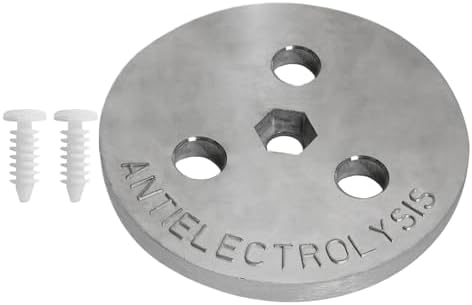
- Robust durability: high-quality workmanship with galvanised surface guarantees optimal performance in salty water – reli…
- Electrolysis resistance: innovative protection technology prevents corrosion caused by salt water exposure, increases ma…
- Dynamic self-regulation: automatic correction of force distribution for stable ion balance and consistent protection in …
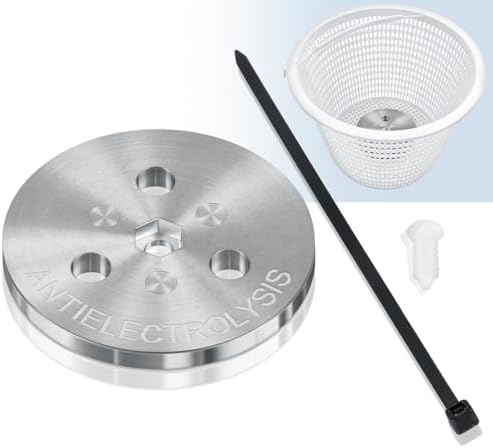
- PREVENTS POOL CORROSION: Protect your pool equipment and surfaces from electrolysis damage with this zinc anode weight, …
- VERSATILE INSTALLATION OPTIONS: The compact skimmer is with 2 cable ties, could easily bolt the anode inside or outside …
- PREMIUM SACRIFICIAL ANODE: Crafted from durable zinc, this weight sacrifices itself to neutralize electrolysis, extendin…

- 【INDUSTRIAL-GRADE PURITY】Crafted from 99.99% pure zinc anode, these zinc strip meets industrial electroplating standards…
- 【ECONOMICAL SET】This zinc anode set includes 10 strips (5x typical quantities), reducing cost-per-piece by 80% for elect…
- 【PRECISION DIMENSIONS】:At 1mm x 25mm x 150mm, this zinc plating kit fits standard electroplating setups. Burr-free edges…
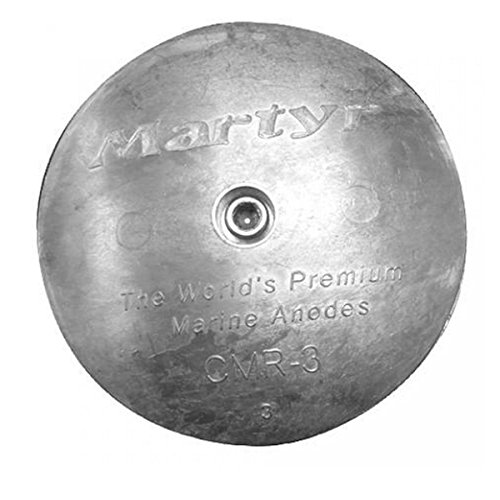
- High-quality Martyr anodes are pressure diecast and manufactured to strict quality standards through an ISO 9001 Quality…
- Martyr anodes offer maximum protection by maintaining quality alloys, free from impurities like iron, which can compromi…
- Three alloys available – Use Zinc (Martyr I) for salt water, Aluminum (Martyr II) for brackish water, or Magnesium (Mart…

- Corrosion Control Ltd.
Address: Unit 4, Riverside Business Park, Riverside Road, Sheffield, S9 2UA, United Kingdom
Website: https://corrosioncontrol.co.uk - NACE International UK Branch
Address: 3rd Floor, 25 Farringdon Street, London, EC4A 4AB, United Kingdom
Website: https://nace.org.uk - UK Cathodic Protection Ltd.
Address: Unit 12, Enterprise Park, Wrexham Road, Chester CH4 9QH, United Kingdom
Website: https://ukcathodicprotection.co.uk - Corrocoat Ltd.
Address: The Old School House, New Lane, Westbury-on-Trym, Bristol BS9 3HQ, United Kingdom
Website: https://corrocoat.com - Cortec UK Ltd.
Address: Unit 5, The Old Mill Business Park, Pyle, Bridgend CF33 6BU, United Kingdom
Website: https://cortecvci.com
Please verify the details directly with each company for the most current information.
Understanding Corrosion and Its Impact on Steel
Corrosion is a natural process that entails the deterioration of materials, primarily metals, due to electrochemical reactions with their environment. This phenomenon is particularly significant for steel structures, which are widely utilized in various industries because of their strength and durability. However, exposure to environmental elements can lead to several types of corrosion that jeopardize the integrity and longevity of steel, such as uniform corrosion, pitting corrosion, and galvanic corrosion.
Uniform corrosion occurs evenly across the surface of the steel, resulting in a gradual loss of material. Although this type can be easier to monitor and predict, the cumulative material loss can significantly weaken the structure over time. Pitting corrosion, on the other hand, is more localized and characterized by small, deep pits that can form on the steel surface. This type is particularly dangerous because it can lead to sudden structural failure without obvious signs of damage. Galvanic corrosion occurs when dissimilar metals are in contact in the presence of an electrolyte, leading to accelerated corrosion of the more anodic metal.
Environmental factors play a pivotal role in accelerating the corrosion process. Moisture, salts from seawater or de-icing agents, and various pollutants can create conditions that promote corrosion. For instance, the presence of moisture facilitates electrochemical reactions that lead to rust formation. Similarly, salts can contribute to the degradation of protective oxide layers on steel, increasing vulnerability to corrosion. Pollutants, such as sulfur dioxide and carbon dioxide, can further exacerbate these effects by forming acidic compounds when they interact with moisture.
Given these challenges, understanding the mechanisms of corrosion is essential for the protection of steel structures. Preventative measures, such as cathodic protection, are critical in mitigating these risks, thereby ensuring structural integrity and reducing maintenance costs over time.
What is Cathodic Protection?
Cathodic protection (CP) is a critical technique used to mitigate corrosion on steel structures, which can be particularly prevalent in environments such as marine settings, pipelines, and storage tanks. The primary objective of CP is to alter the electrochemical process that leads to corrosion, effectively safeguarding the integrity and longevity of the metal. This technique operates on the fundamental principle of electrochemistry, where it diverts damaging reactions away from the steel surface, thereby preventing deterioration.
There are two main types of cathodic protection systems: galvanic (sacrificial anode) systems and impressed current systems. Galvanic systems utilize a more anodic metal as a sacrificial anode. When these anodes are connected to the metallic structure intended for protection, they corrode preferentially. This mechanism ensures that the steel structure remains protected as the sacrificial anodes deteriorate over time, thereby redirecting the corrosive reactions away from the steel.
On the other hand, impressed current systems involve a more complex setup where an external power source drives a current through the cathode, thus mitigating corrosion. This approach allows for the use of inert anodes and can be adjusted according to the specific conditions of the environment, making it a versatile solution for various applications. The impressed current system actively supplies electrons, effectively reversing the electrochemical reactions that lead to corrosion, and can protect larger structures over a more extensive area compared to galvanic systems.
In essence, cathodic protection is indispensable for extending the lifespan of steel structures and ensuring safety and functionality. By employing either galvanic or impressed current systems, engineers can shield these vital assets from the damaging effects of corrosion, maintaining their integrity in challenging environments.
Applications of Cathodic Protection in Steel Structures
Cathodic protection (CP) is a critical intervention for the preservation of various steel structures across diverse industries. One of the pivotal applications of CP is within the oil and gas sector. Pipelines, storage tanks, and offshore platforms are susceptible to corrosion due to environmental factors. By employing cathodic protection systems, these steel structures are shielded from the damaging effects of electrochemical corrosion, thereby significantly extending their operational lifespans and ensuring continuous service without costly interruptions.
In water treatment facilities, CP plays a vital role in safeguarding the integrity of steel tanks and pipelines. The plants often utilize cathodic protection systems to combat corrosion caused by water, chemicals, and varying pH levels. This protective measure not only enhances the durability of the infrastructure but also improves the reliability of water supply systems, preventing leaks and system failures.
Marine structures, including piers, harbors, and ships, are also significant beneficiaries of cathodic protection. The harsh marine environment accelerates the corrosion process, making CP an essential component in the upkeep of these structures. Effective implementation of cathodic protection helps to maintain structural integrity, thereby ensuring safety for both personnel and equipment operating within these environments.
Utility infrastructures, which encompass substations, transmission towers, and pipelines, see enhanced resilience through cathodic protection. The application of CP in these scenarios serves not only to reduce maintenance costs but also to extend the lifecycle of the steel components involved. Numerous case studies illustrate the effectiveness of such systems, demonstrating that the early implementation of cathodic protection leads to a significant reduction in costly repairs and downtime, ultimately ensuring operational efficiency and safety across industries.
Challenges and Future of Cathodic Protection
Cathodic protection, a key solution for safeguarding steel structures from corrosion, faces several challenges that hinder its widespread implementation. One of the major issues is the complexity of system design, which requires a comprehensive understanding of the electrochemical processes at play. Each structure presents unique conditions, including soil resistivity, water chemistry, and structure geometry, making one-size-fits-all solutions often ineffective. Engineers must tailor cathodic protection systems to fit these diverse conditions, which can be both time-consuming and costly.
Maintenance also poses a significant challenge. Regular monitoring and upkeep are essential to ensure the long-term effectiveness of cathodic protection systems. However, financial constraints and resource limitations often lead to inadequate maintenance schedules, risking system integrity and increased vulnerability to corrosion. Moreover, some systems may suffer from interference effects, particularly those involving multiple nearby structures, necessitating advanced techniques to mitigate these issues.
Environmental regulations are evolving continuously, adding another layer of complexity to cathodic protection. Stricter guidelines regarding chemical usage and emissions can hinder the application of certain protective measures, compelling professionals to find sustainable alternatives that align with environmental standards. Fortunately, advancements in technology are emerging, offering hope for the future of cathodic protection. Innovative smart monitoring systems enable real-time tracking of corrosion rates and system performance, facilitating proactive maintenance measures. Furthermore, breakthroughs in materials science are leading to the development of new protective coatings and anode materials that enhance the effectiveness of cathodic protection.
As the landscape of corrosion protection for steel structures evolves, the integration of such advanced technologies could revolutionize cathodic protection strategies. The ongoing need for effective protective measures remains critical, especially in our increasingly challenging environmental conditions. Emphasizing ethical and sustainable practices will be pivotal as we navigate these challenges, ensuring a robust defense against corrosion well into the future.
Contact information — Please use contact form on http://www.abshot.com/contact/